Ancient History
Assam's history is deeply rooted in ancient mythology and literature. References to the region can be found in key ancient texts such as the Mahabharata, Ramayana, and various Puranas.
-
Pragjyotisha: The name "Pragjyotisha" is associated with ancient Assam in Sanskrit literature. The term means "City of Eastern Astrology" or "City of the Eastern Star." The word "Prag" means "former" or "eastern," while "Jyotisha" refers to "astrology" or "a star." Thus, the name could symbolize the region's early association with knowledge or wisdom. Some sources connect the name to the region’s astronomical or religious significance in ancient times.

-
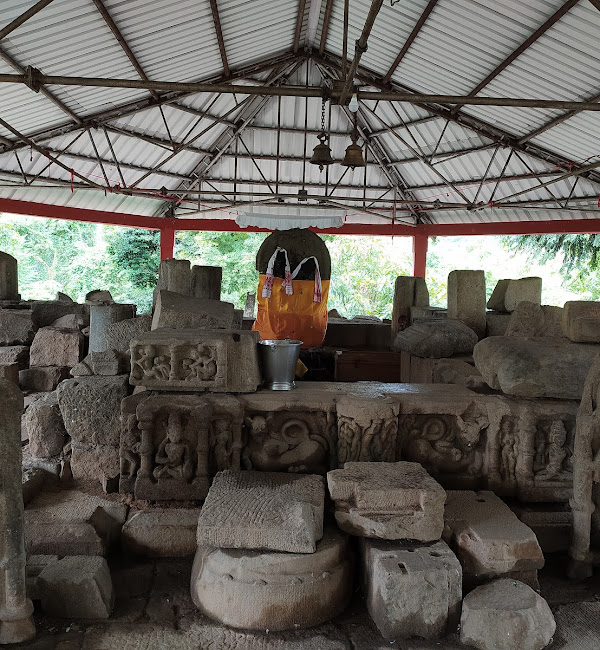
Kamrupa: The name "Kamrupa" is also mentioned in ancient texts and is linked to a famous mythological story. According to the myth, after Sati's death and her body being dismembered by Vishnu, one part of her body fell on the Nilachal hills in Assam, making the place sacred. The mythology suggests that the region was named "Kamarupa" (meaning "where Kama regained his form"), signifying a spiritual rebirth.
Medieval Period
-
Ahom Dynasty (1228 - 1826): The Ahoms were a Mongoloid race who arrived in Assam from what is now Myanmar (Burma) in the 13th century. They established a dynasty that lasted for nearly 600 years. The founder of the Ahom dynasty, Sukaphaa, crossed the Patkai Mountains in 1228 AD and made Assam his new kingdom. The Ahoms successfully resisted external invasions and maintained a highly organized system of governance.
-
The Ahom Kingdom was a powerful and strategic political entity in Southeast Asia, known for its administrative sophistication and military prowess. Their reign is regarded as a golden era in Assam’s history, characterized by stability, economic prosperity, and cultural flourishing.
-
Notable Ahom Kings: Kings like Rudra Singha (who ruled during the 17th century) made significant contributions to Assamese culture, literature, and religious practices. The construction of monumental structures like the Madhav Temple is attributed to him.
-
Burmese Invasion and British Rule
-
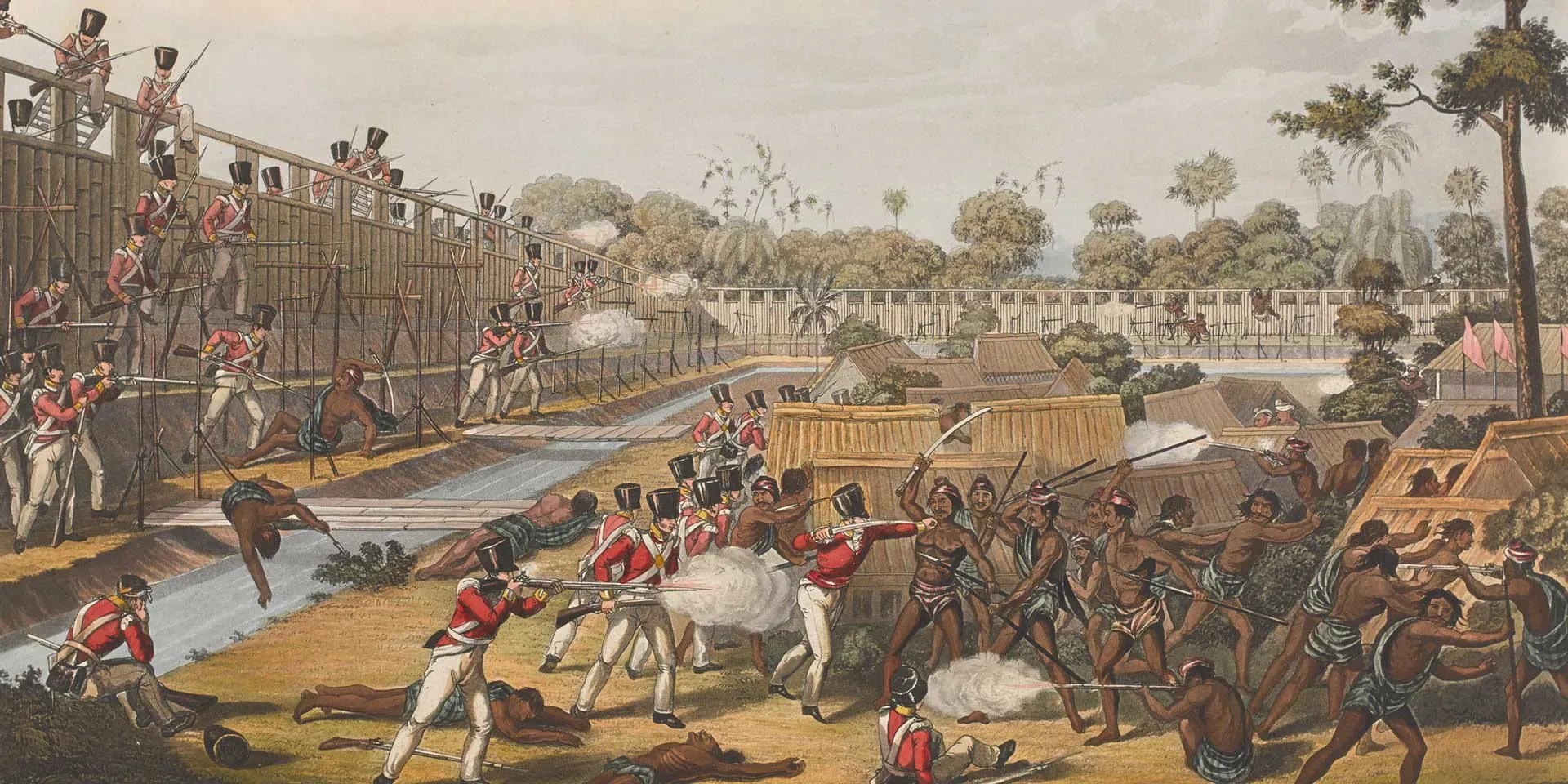
Burmese Invasion (1817 - 1826): In the early 19th century, the Ahom kingdom weakened due to internal strife and external threats. In 1817, the Burmese invaded Assam, leading to widespread devastation. The Treaty of Yandaboo (1826) ended the Burmese rule over Assam, and the region was annexed by the British East India Company.
-
Colonial Assam: After the British annexed Assam, they incorporated the region into British India, which marked the beginning of the colonial period. This also resulted in major changes in Assam's economy, administration, and society.
-
Territorial Losses: Over time, Assam lost territory to other newly-formed states. In 1832, Cachar was annexed, and in 1835, the Jaintia Hills were brought under British control. The creation of new states such as Meghalaya, Nagaland, and Mizoram after India’s independence further reduced Assam’s geographical boundaries.
-
Formation of Assam Province: In 1874, Assam became a separate province under the British colonial administration, with Shillong as its capital.
-
Post-Independence Era
-
Assam's Integration into India: With the Independence of India in 1947, Assam became part of the newly-formed Indian Union. The state's boundaries were subject to change after the partition of India, with the district of Sylhet being ceded to Pakistan.
-
First Governor and Chief Minister: The first Governor of independent Assam was Sir Muhammad Saleh Akbar Hydari, and the first Chief Minister was Gopinath Bordoloi. Under Bordoloi’s leadership, Assam witnessed the establishment of institutions like Gauhati University and Gauhati High Court in 1948.
-
-
Political Changes and Challenges: Assam faced several political challenges in the post-independence period, including the formation of new states like Meghalaya (1972), Nagaland (1963), Arunachal Pradesh (1987), and Mizoram (1987). The loss of territory and the shifting political boundaries were significant aspects of Assam’s post-independence history.
The Assam Movement (1979-1985)

-
Causes of the Movement: The Assam Movement emerged in response to the perceived threat posed by illegal immigration, particularly from neighboring Bangladesh. The All Assam Students' Union (AASU) led the movement, demanding identification and deportation of illegal immigrants and greater political rights for indigenous Assamese people.
-
The Assam Accord (1985): The movement culminated in the Assam Accord, signed in August 1985 between the Indian government and AASU leaders. The Accord aimed to safeguard the rights of indigenous Assamese people, address the issue of illegal immigration, and set the framework for protecting Assam’s culture and heritage.
Economic Development and Modern Assam
-
Industrialization: After independence, Assam saw the establishment of key industries, including the oil refinery at Noonmati (1962), the Bongaigaon Petro-Chemicals plant, and the Saraighat Bridge (1965). These developments significantly boosted the state’s economy and infrastructure.
-
Political Leadership: After the tenure of Gopinath Bordoloi, Assam had several Chief Ministers who contributed to the state’s development. Bimla Prasad Chaliha (1957-1970) oversaw the construction of key infrastructure projects, while Mohendra Mohan Choudhury (1970-1972) played a role in industrializing the state.
Territorial and Political Changes
-
The capital of Assam was originally Shillong, but it was moved to Dispur, a suburb of Guwahati, in 1972.
-
The creation of Meghalaya (1972), Nagaland (1963), Arunachal Pradesh (1987), and Mizoram (1987) from Assam’s territory significantly reshaped the state’s political landscape.
-
Assam continues to be a state of diverse ethnic groups, languages, and cultures. The current political challenges involve managing ethnic tensions, environmental sustainability, and economic development.
Present-Day Assam


- Area and Population: Assam covers an area of 78,438 square kilometers and has a population of over 35 million people. It is home to a rich variety of ethnic groups, including indigenous Assamese, Bodos, and various tribal communities. It remains a major center of political, cultural, and economic activity in Northeast India.
-
Cultural Diversity: Assam is known for its Bihu dance, traditional music, and vibrant festivals like Bohag Bihu and Magh Bihu. The state is also home to various indigenous languages such as Assamese, Bodo, and others, and is culturally linked to neighboring regions.
-
Environmental and Development Challenges: Assam faces challenges related to floods, river erosion, and industrial pollution. The state has also worked towards the preservation of its biodiversity, including maintaining sanctuaries like Kaziranga National Park (home to the one-horned rhinoceros) and Manas National Park.
Conclusion
Assam’s history has been shaped by various dynasties, colonial rule, political movements, and its ongoing journey to maintain its cultural heritage while modernizing. It remains an integral part of India’s northeastern region, with a complex and diverse history that continues to influence the present.