Vinayak Godse is a name forever linked to one of the most tragic and controversial events in Indian history—the assassination of Mahatma Gandhi. On January 30, 1948, Godse shot Gandhi three times in the chest at Birla House, New Delhi.
This act sent shockwaves throughout the world. But what led Godse to take such an extreme step? This article explores his background, ideology, and the reasons he cited for Gandhi's assassination, which he outlined in his courtroom statement, later known as “Why I Killed Gandhi.”
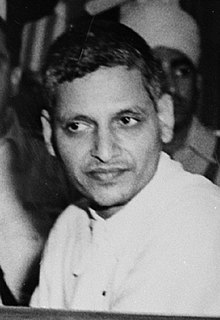
Who Was Nathuram Godse?
- Full Name: Nathuram Vinayak Godse
- Born: May 19, 1910, in Baramati, Pune District, Bombay Presidency, British India
- Died: 15.11.1949 (Hanged at Ambala Central Jail, Punjab, India)
- Affiliations: Initially associated with the Rashtriya Swayamsevak Sangh (RSS) but later joined the Hindu Mahasabha
- Occupation: Political activist, editor of a Marathi newspaper Agrani
Godse was raised in a deeply religious Chitpavan Brahmin family. Interestingly, due to superstitious beliefs, his parents initially dressed him as a girl in childhood, fearing that he might not survive otherwise—this is why he was named Nathuram (meaning one who wears a nose ring).
However, he grew up to be a passionate nationalist and was deeply influenced by the ideas of Vinayak Damodar Savarkar, the proponent of Hindutva ideology.
Why Did Nathuram Godse Kill Gandhi ?
Godse believed that Mahatma Gandhi’s policies, actions, and influence on the Indian government were detrimental to Hindu interests and the newly independent nation.
Below are the key reasons he cited for assassinating Gandhi:
Gandhi’s Policy of Appeasement Toward Muslims
Godse accused Gandhi of being biased in favor of Muslims while disregarding the interests of Hindus. He felt that Gandhi’s philosophy of non-violence (Ahimsa) was only forced upon Hindus, even when they were victims of communal violence. Godse argued that Gandhi never pressurized Muslims the same way to uphold non-violence.
Blaming Gandhi for India’s Partition (1947)
- India was partitioned into India and Pakistan in 1947, which led to massive communal violence.
- Godse believed that Gandhi’s soft stance towards Jinnah and the Muslim League contributed to the partition, which resulted in the death and displacement of millions of Hindus and Sikhs.
- He argued that if Gandhi had firmly opposed partition, India could have remained united.
₹55 Crore Payment to Pakistan (1948)
- After partition, India was supposed to pay ₹75 crore to Pakistan as part of a financial agreement.
- However, due to the Kashmir conflict, the Indian government initially withheld ₹55 crore.
- Gandhi went on a hunger strike, pressuring the government to release the money to Pakistan, despite the fact that Pakistan was engaged in war against India.
- Godse saw this as an act of treason, where Gandhi prioritized Pakistan’s interests over India’s.
Failure to Protect Hindus During Riots
- During partition, Hindus and Sikhs were massacred in Pakistan, and Godse felt that Gandhi remained silent.
- However, whenever Muslims were attacked in India, Gandhi would immediately intervene and fast for peace.
- Godse saw this as a double standard and a betrayal of Hindus.
Gandhi’s Non-Violence Weakening India
- Godse argued that Gandhi’s extreme adherence to non-violence made Hindus weak.
- He believed that India needed to defend itself militarily, especially after partition and conflicts with Pakistan.
- Gandhi’s approach, in his view, undermined the strength of Hindus and the nation.
Gandhi’s Influence Over the Government
- Even after independence, Gandhi’s influence over Nehru and the Indian government was immense.
- Godse believed that Gandhi’s decisions were being forced upon the country, even when they were not in the national interest.
The Assassination of Mahatma Gandhi
- Date: 30.01.1948
- Location: Birla House, New Delhi
- Method: Godse fired three bullets from a Beretta M1934 pistol into Gandhi’s chest during a prayer meeting.
- Words Before Shooting: Gandhi is said to have uttered “Hey Ram” after being shot.
- Godse’s Arrest: He was immediately subdued and arrested at the scene.
Trial and Execution of Nathuram Godse
- Date of Trial: 05.05.1948 – 08.11.1949
- Verdict: Sentenced to death for murder and conspiracy
- Execution Date: 15.11.1949
- Place of Execution: Ambala Central Jail, Punjab (now in Haryana)
- Executed Along With: Narayan Apte, his co-conspirator
- Last Words: "Akhand Bharat Amar Rahe" (Long Live Undivided India)
Godse’s Justification: The Statement “Why I Killed Gandhi”
During his trial, Godse delivered a 90-minute statement explaining why he killed Gandhi. His speech was later published as a controversial document titled “Why I Killed Gandhi.” In it, he stated:
- “I do not deny that I killed Gandhi. I hold myself responsible for it.”
- “I am not against any religion, but I oppose those who put their religion above the nation.”
- “I did not act out of personal anger but for the sake of my country.”
- “Gandhi was making decisions that weakened India and harmed Hindus.”
Legacy and Controversy
- Most Indians condemn Godse as a terrorist and an assassin who disrupted the peace of the nation.
- However, some Hindu nationalist groups see him as a patriot who acted to protect Hindu interests.
- His speech, “Why I Killed Gandhi,” remains banned in many parts of India due to its controversial nature.
- There have been repeated demands from some right-wing groups to reassess Godse’s role in history, while others strongly oppose such efforts.
Nathuram Godse’s assassination of Mahatma Gandhi remains one of the darkest chapters in Indian history. While his actions were driven by ideological convictions, they were condemned as an act of extremism.
Gandhi, despite criticism, remains a global symbol of peace and non-violence, while Godse’s legacy remains a subject of intense debate in India’s political and historical discourse.
Would history have taken a different course without Gandhi's assassination? That remains an open question. But one thing is certain:
Gandhi’s legacy endures, while Godse’s name remains forever tied to an act that shook the nation.
Important Links:
Understanding Tenses Made Simple
Government Health Insurance Schemes in India
Mission Bhumiputra – Assam Caste Certificate
Employment Exchange Registration: Apply Online
How Can I Connect My PAN Card to My Aadhaar ?
How to apply EWS Certificate ?